Every donor deserves personal attention.
It’s Monday morning. Your briefing is ready—who needs attention this week, why, and a draft to start from. The coffee’s still warm. That’s fundraising with AI at your side, and a human in charge of every relationship.
Also on Amazon — paperback and Kindle.
Or at Barnes & Noble, Books-A-Million, and Walmart.
See the book in action.
Try Project Aardvark — FreeIt runs free in your browser, with nothing to install.
“An engaging read that provides an immediate action plan and sparks ideas for real world application.”—Russell N. James III, JD, PhD, CFP®
CharityChannel Press · 2026
What it is
AI handles the production work so you can do the human work.
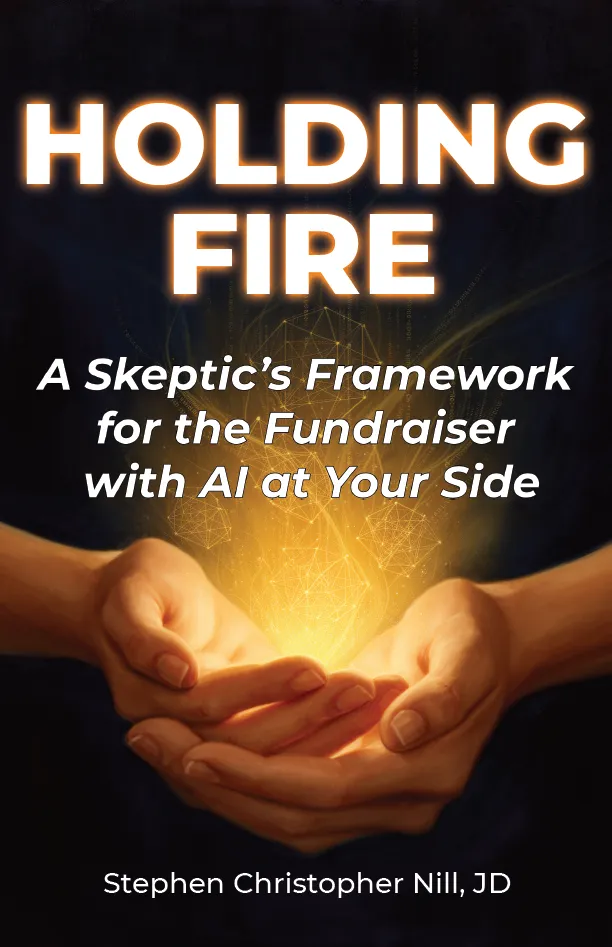
Whether a donor base numbers forty, four hundred, or four thousand, there are more relationships than any human or team of humans can personally attend to. Give AI a donor’s complete record and it can spot trends a busy fundraiser would miss. It can draft a personal thank-you note or a donor briefing in seconds, and it can review an entire donor base and report which donors are trending upward, which are at risk of lapsing, which match the profile of the organization’s best major gift prospects, and which new donors are showing early signs of deep commitment.
What AI cannot do is build a real human relationship. It can prepare a fundraiser for the conversation and even draft a convincingly heartfelt note, but the conversation itself and the heart behind the note have to come from a person.
This is why the subtitle says skeptic. Stephen’s position, stated on the book’s first pages, is that it would be foolish to adopt AI in fundraising without maintaining a deep and permanent skepticism about how it is being used. The Human-Centered AI Framework at the heart of the book is built on that skepticism: five elements that keep the human at the center of every decision and every relationship, so the fire warms instead of burns.
Meet Aardie, your AI coach
See the book in action — free, right now.
You can run the Monday morning review at the top of this page yourself, right now. Project Aardvark is the book’s hands-on companion: a complete practice relationship-building system that runs free in your browser, with an AI coach named Aardie already inside. There is nothing to install and no AI subscription to buy; open it, and Aardie follows the rules the book teaches from the first message.
Inside are two worlds. The first is the food bank from the book’s own pages, with Maria Chen, Dr. Sarah Huang, the Whitfields, and the rest of the cast waiting in full donor records. The second is a university advancement office, so the practice keeps going after the book’s last page. Work the same Monday morning review the book walks through, then hold your results up against the book’s — Aardie cites Holding Fire and the framework as it works.
Try a bold reengagement letter or misjudge an ask, and no real donor ever feels it. Project Aardvark is an open project, free to anyone who wants to practice.
What’s inside
Ten chapters take you from the fire story to your first Monday morning.
Chapter 1
A New Kind of Fire
Chapter 1 opens with the fire story and the confession behind the subtitle, then lays out the five elements of the framework. It coins the term relationship-building system, a deliberate replacement for CRM, and closes with a complete Monday morning in action.
Chapter 2
The Monday Morning Strategic Review
Chapter 2 examines the weekly anchor of the whole practice: the AI reports which donors need attention and why, and the fundraiser sets the priorities and makes every call.
Chapter 3
Seeing the Whole Donor
Chapter 3 teaches the two lenses the book pairs for reading any donor: the donor relationship arc, and the classic qualification model of Linkage, Ability, and Interest. Together they reveal a donor’s trajectory and potential, the dimensions gift size alone misses.
Chapters 4 through 7
Annual Giving, Major Gifts, Stewardship, and Lapsed Donors
Chapters 4 through 7 apply the framework to the four big jobs: reimagining annual giving, running a major gifts program, stewardship that feels personal, and winning back lapsed donors. Each chapter runs the same workflow and shows the AI’s first draft beside the fundraiser’s finished version.
Chapter 8
Setting the Guardrails
Chapter 8 covers the governance work of adopting AI: the boundaries an organization draws around its practice, and the board’s role in holding them.
Chapter 9
Ethics, Trust, and the Human Center
Chapter 9 goes deep on the ethical questions, built around three guardrails: the hierarchy that puts the donor’s interest first, the honored-or-handled test, and the bias-aware human review. It includes a sample AI use policy an organization can adapt as its own.
Chapter 10
Your First Monday Morning
Chapter 10 is the deployment chapter, where the reader points an AI assistant at the published Specification and translates the book into whatever relationship-building system the organization already runs. It ends with the reader’s own first Monday morning review, with real donors.
The chapters teach the human side of the framework; the published Specification handles the AI side. Together they are the working partnership the subtitle promises — with AI truly at your side.
What readers say
The first reviews are in.
“A well-written and easy to read book on leveraging AI in the nonprofit world. Stephen Nill presents a balanced approach on embracing AI capabilities and retaining the integrity of the donor-fundraiser relationship. An engaging read that provides an immediate action plan and sparks ideas for real world application.”
— Russell N. James III, JD, PhD, CFP®Joanne Oppelt, CNE, CDE, CNC, reviewed Holding Fire in a full guest review.
Read Joanne’s full review →The framework
The framework is bigger than the book.
The Human-Centered AI Framework is more than the book’s chapters. It is published in full as the Operating Specification, a free public document at charitychannel.com/framework, and it works with any major AI assistant: Claude, ChatGPT, Gemini, or the one built into your own relationship-building system.
The book is the human half of a working partnership; the Specification instructs the AI. If you want your fundraising platform to work this way, you can point the company that runs your donor database to it.
The Operating Specification is free to read and to share with attribution to CharityChannel LLC.
About the author
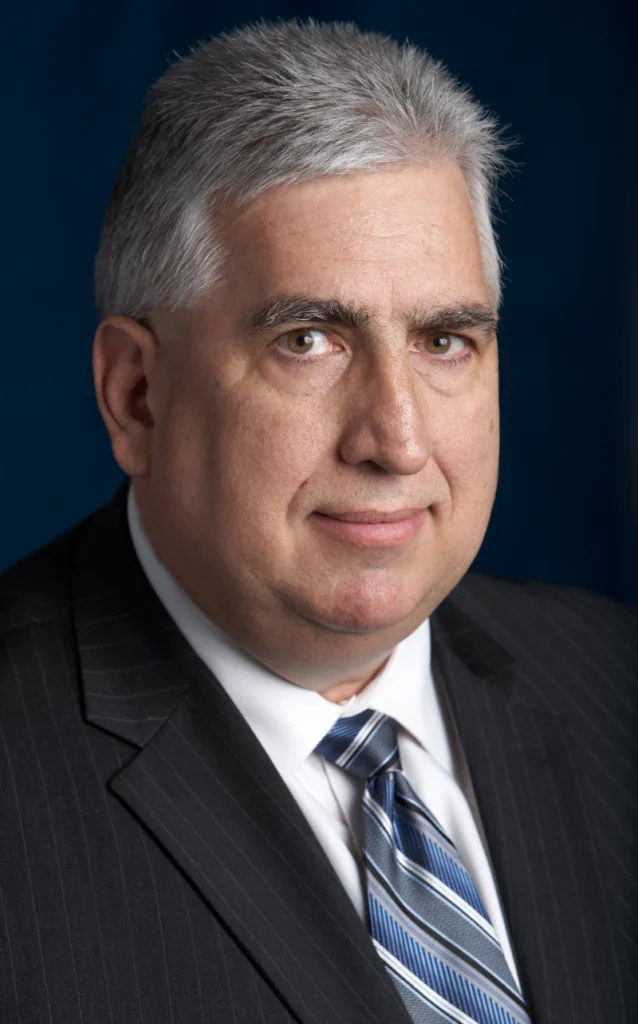
Stephen Christopher Nill, JD
Stephen founded CharityChannel and has published more than 120 titles for the nonprofit sector through CharityChannel Press. He has advised hundreds of nonprofit organizations as a California-licensed tax-exempt organization attorney and has served as a subject-matter expert on nonprofit issues for CNN, Fox News, CNBC, Forbes Magazine, and the London Times, on air and in print.
He is also a classically trained composer and a novelist, and the skepticism in the book’s subtitle is personal: Stephen works to keep AI out of that creative life entirely, composing at an acoustic piano with pencil and staff paper. He wrote Holding Fire because the same fire he keeps out of his art can do for fundraisers what no amount of extra hours ever could — when it is held carefully.
Good to know
A few questions come up often.
Which formats does the book come in?
Holding Fire comes in paperback and Kindle editions. The paperback is available direct and from major booksellers, and the Kindle edition is on Amazon. There is no hardcover.
Should I buy direct or from a retailer?
Buying direct supports the press, and the paperback ships straight to you. If you prefer Amazon, Barnes & Noble, Books-A-Million, or Walmart, the links near the top of this page go straight to the book at each retailer.
Do I need an AI subscription to use the book’s methods?
The methods work with any major AI assistant, and Project Aardvark runs free in your browser with the AI already inside. There is nothing to install and no subscription to buy.
Is the framework really free?
The full Operating Specification is free to read at charitychannel.com/framework, and it is free to share with attribution to CharityChannel LLC.
Your next Monday morning doesn’t have to look like the last one.
Picture a Monday a few weeks from now. The coffee is still warm when the briefing appears: the donors who need attention this week, each with a specific reason and a starting draft — with a human making every call that touches a donor, and the fire held exactly where it belongs.
Also on Amazon — paperback and Kindle.