
An open letter to fundraising’s professional associations, for every fundraiser to sign
To AFP, CGP, AHP, CASE, NANOE, the Giving Institute, and every other association, roundtable, and council that sets standards for our profession:
Artificial intelligence is the new fire. Tended, it warms every donor relationship in our care; set loose, it burns them. A fire needs a person tending it, and that is what we are asking you to require: adopt an ethical standard that expressly requires a human to personally review and approve every AI-generated communication before it goes to a donor.
We make it ourselves, and every colleague whose name follows makes it with us:
A person reads and approves every communication a donor receives.
We wrote it as one sentence, to give you a place to start. By donors we mean everyone we ask: the people who give now and the people we hope will give, whether our shops call them alumni, patients, parishioners, members, or neighbors.
Artificial intelligence can do amazing things at the side of development officers: it reads the donor records, notices the donor whose giving has quietly stopped, drafts the letter the development officer will revise and send, and frees that officer for more visits, more phone calls, more handwritten notes, and more time face to face with donors. Used this way, the fire warms the human-to-human relationship, and we support those who use it so. We call this AI at our side.
But there is an emerging use of AI that alarms us: setting it to bypass the development officer and reach the donor directly. Commercial vendors now let their AI write to donors on its own, thank them, steward them, and ask them for gifts, and no person reads what the machine sends before it arrives. We call this empty-chair AI.
Some organizations will conceal this use of AI, even giving the AI a human name. The donor who discovers it feels lied to, and trust is broken. Some organizations will disclose the practice of empty-chair AI. But disclosure does not tame the fire: once a donor knows a machine and not a human is speaking for the organization, the donor will feel diminished and unimportant. The relationship will suffer and maybe even be severed.
Either way, doubt spreads to every other nonprofit, even the ones who never lit a match. Philanthropy runs on trust, and trust is held in common. One organization’s fire scorches us all.
The fundraising profession’s codes of ethics do not yet expressly prohibit empty-chair AI. The names under this letter are your colleagues asking you to write the standard in, before it is too late.
We are not asking you to put the fire out. Used ethically, AI can be a boon to development officers. We are asking for one thing: that a person always tends it. The donor who reads a nonprofit’s next communication will assume a person wrote it. We would like that to stay true.
Stephen Christopher Nill, JD
Author of Holding Fire: A Skeptic’s Framework for the Fundraiser with AI at Your Side (CharityChannel Press, 2026)
Steven L. Meyers, PhD
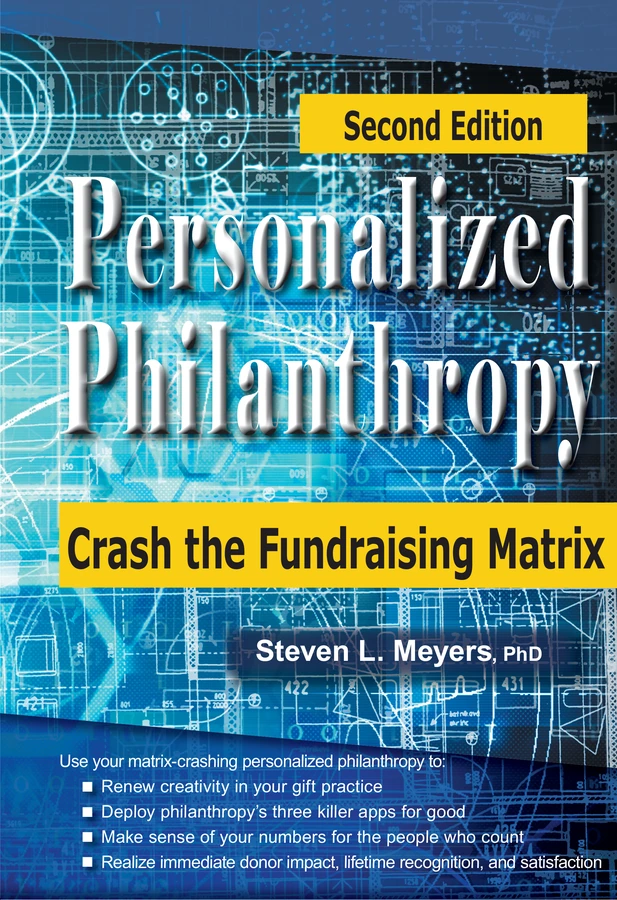
Author of Personalized Philanthropy: Crash the Fundraising Matrix (CharityChannel Press, 2021)
This letter was first published on August 10, 2026 and has been open for signature ever since.
Signing is a statement of your professional stance. Titles and organizations appear so we can know one another; you are not signing on behalf of your employer.
Ask the company that runs your donor database, in writing, whether it will commit that no AI in its product communicates directly with a donor without a person approving the message. Then take the standard to your board and urge its adoption for the organization.
A person reviews every name before it appears.
For the signed

Meet Aardie: a working demonstration of an AI coach that faces you, never your donors. Nothing to buy.
Try the demonstration →
The Human-Centered AI Framework Operating Specification: published rules any company that runs an AI-enabled donor database is free to implement. One core rule: the AI never contacts a donor directly.
Read the Specification →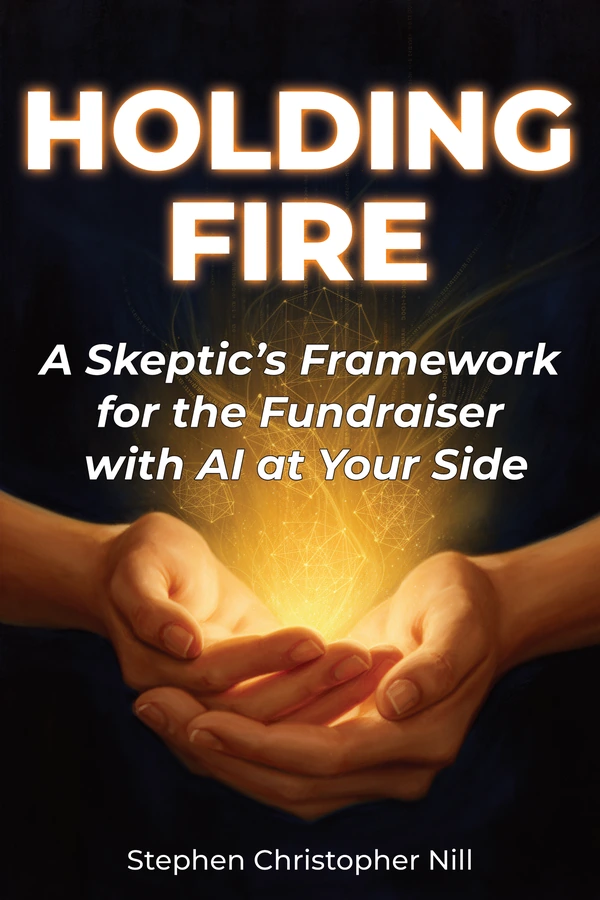
Holding Fire — a skeptic’s guide for working with an AI that knows its place. About the book →
Personalized Philanthropy — where the soul comes from: gifts designed with donors, never extracted from them. Learn more →